Florida Reef Conservation · Lionfish Removal
Removal Support

Why Lionfish Are Invasive

One of Florida's most destructive invasive species — and the case for why consistent removal matters for reef recovery.

Safety notice

This page is informational only and is not dive instruction or safety training. Scuba diving and lionfish removal are inherently dangerous activities that can cause serious injury or death, including from drowning, decompression illness, and envenomation from lionfish spines. Only certified, trained, and properly equipped divers should attempt removal, and only where it is lawful and permitted. Always consult a qualified dive professional and obtain appropriate medical care. You participate in any diving or removal activity at your own risk. See our Terms of Service for details.

The invasive lionfish crisis in Florida

Lionfish are one of the most destructive invasive species threatening Florida's marine ecosystems. Originally native to the Indo-Pacific region, these apex predators were introduced to Atlantic waters — reportedly through the aquarium trade — and have established widespread populations that affect reef dynamics.

Native range
Indo-Pacific

Atlantic populations have no co-evolved predators.

Diet
50+ species

Native reef fish reported as prey across studies.

Defense
Venomous

18 spines deter predation in Atlantic ecosystems.

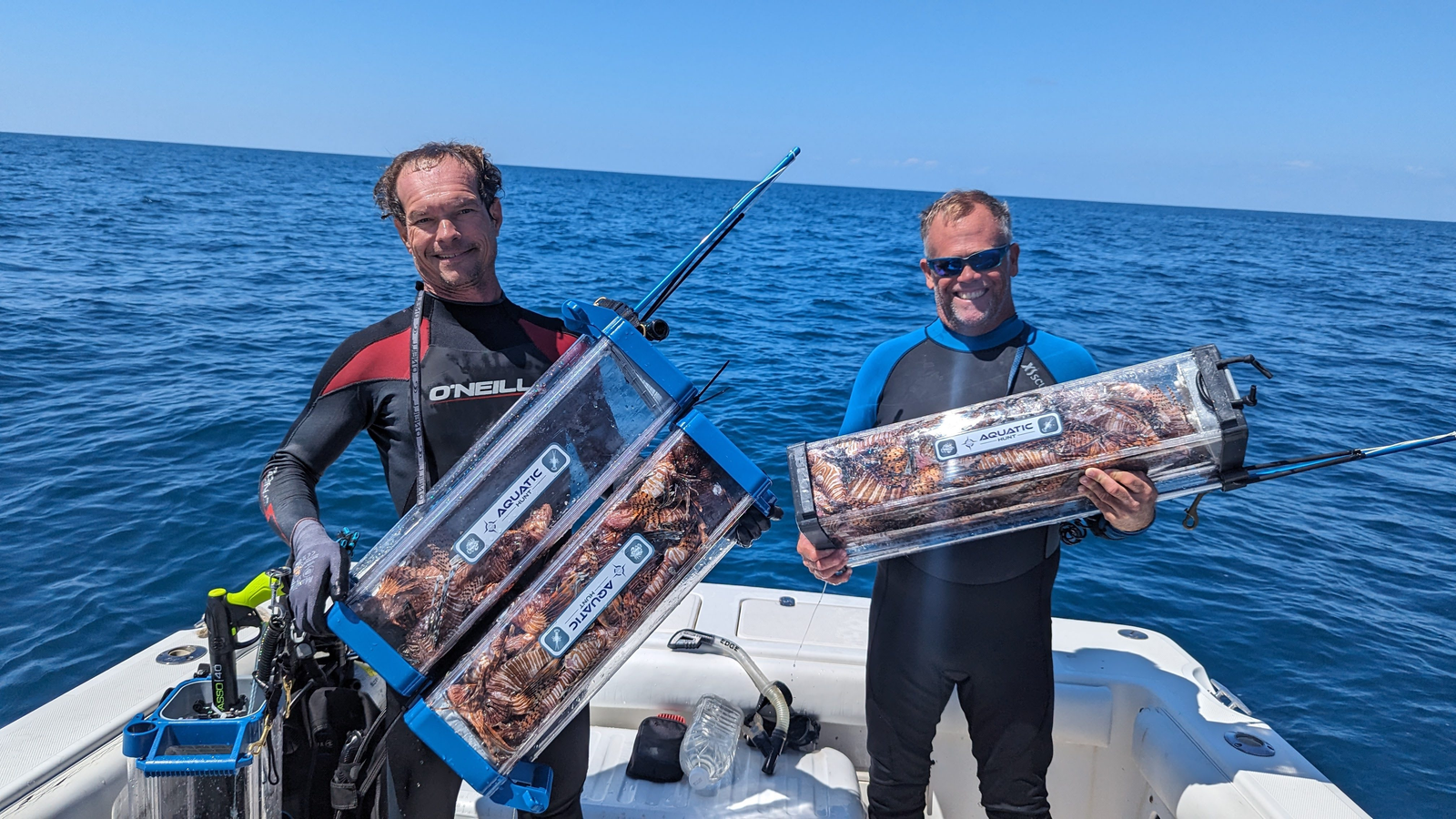
Ecological impactTwo divers on a boat with tubes packed full of culled lionfish
A predator without checks

Why native fish can't compete.

Researchers have reported that individual lionfish can prey on dozens of native fish species and consume prey up to roughly half their own body size. With few natural predators in their new habitat, lionfish populations have expanded across Florida's reefs, seagrass beds, and coastal waters.

  • Venomous spines deter predation
  • High reproductive output across the year
  • Aggressive ambush hunting with strong eyesight
  • Dietary flexibility — many species smaller than themselves
  • Rapid growth to reproductive maturity within a few years
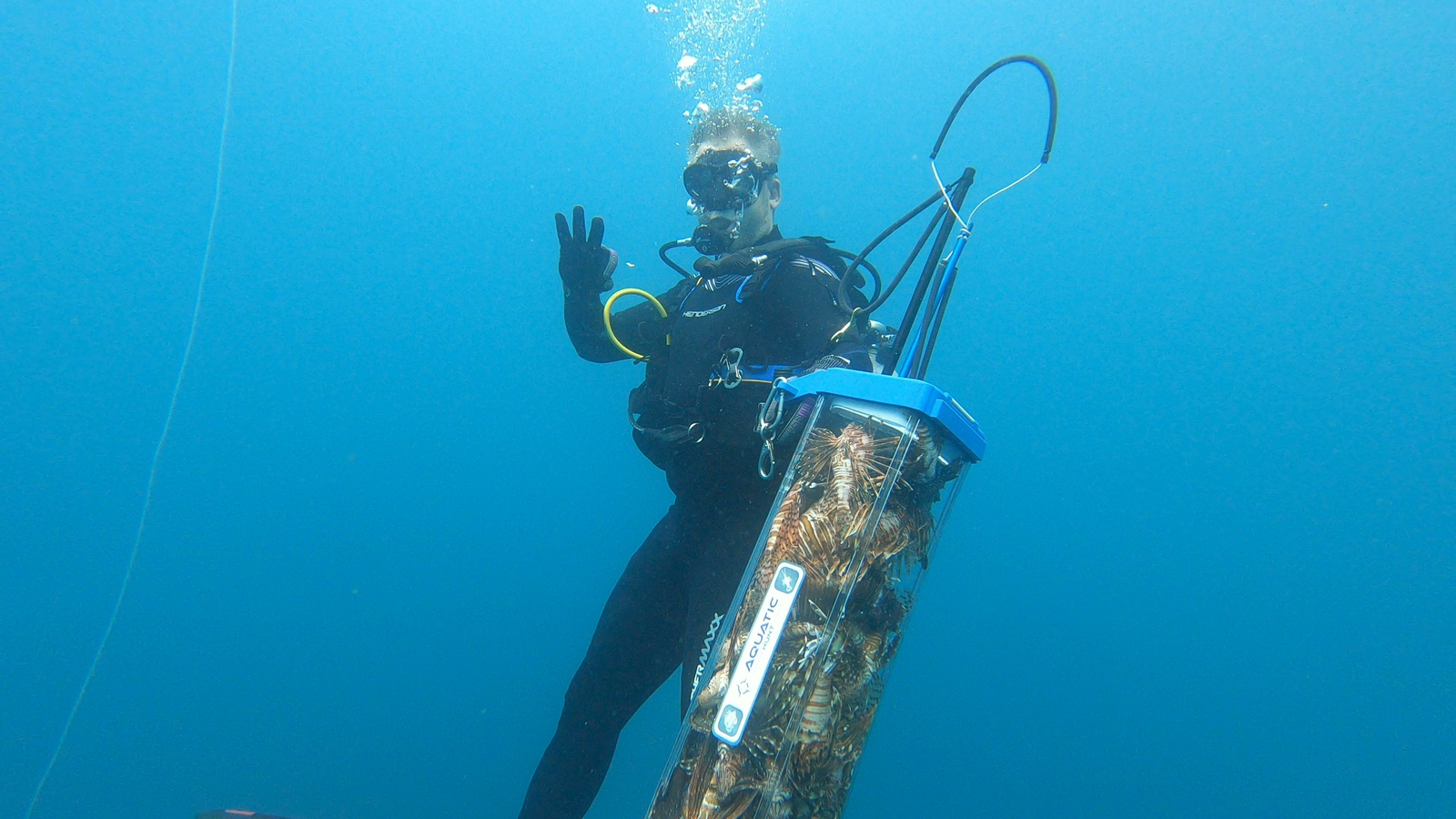
Impact on reefsDiver underwater making the OK sign next to a tube of culled lionfish
Cascading damage

How the reef ecosystem unravels.

Florida's coral reefs are already stressed by climate change, pollution, and overfishing. Lionfish predation accelerates the decline of native fish populations that maintain reef health.

Young fish that would grow up to eat algae and maintain reef structure are consumed before reaching maturity. Herbivorous fish populations decline, leading to algae overgrowth that smothers corals. The entire reef ecosystem cascades toward dysfunction.

What science tells us about removal

While eradication is nearly impossible given the extent of lionfish populations, strategic removal in critical areas has demonstrated measurable benefits:

  • Removed reefs show recovery of native fish populations within months
  • Herbivorous fish numbers rebound, reducing algae overgrowth
  • Consistent removal efforts prevent rapid population reestablishment
  • Areas with ongoing removal maintain significantly higher reef health

Why we can't wait

Every month that passes allows lionfish populations to grow and spread into new areas. Early intervention in regions they're just colonizing can prevent the explosive population growth seen in heavily invaded areas.

Removal efforts today protect future reef recovery and preserve ecological opportunities that may not exist if we delay action.

Join the mission

Support reef recovery.

Whether you're a diver, marine enthusiast, or someone who cares about Florida's natural heritage, there are ways to support removal efforts.